Ocean Sole is Truly Everything
Saving Kenya’s Environment
Hiring Local Workers
Sustainable Social Enterprise
You made the dream come true!!!
Your Custom Text Here
1. When is the best time to go on an African Safari?
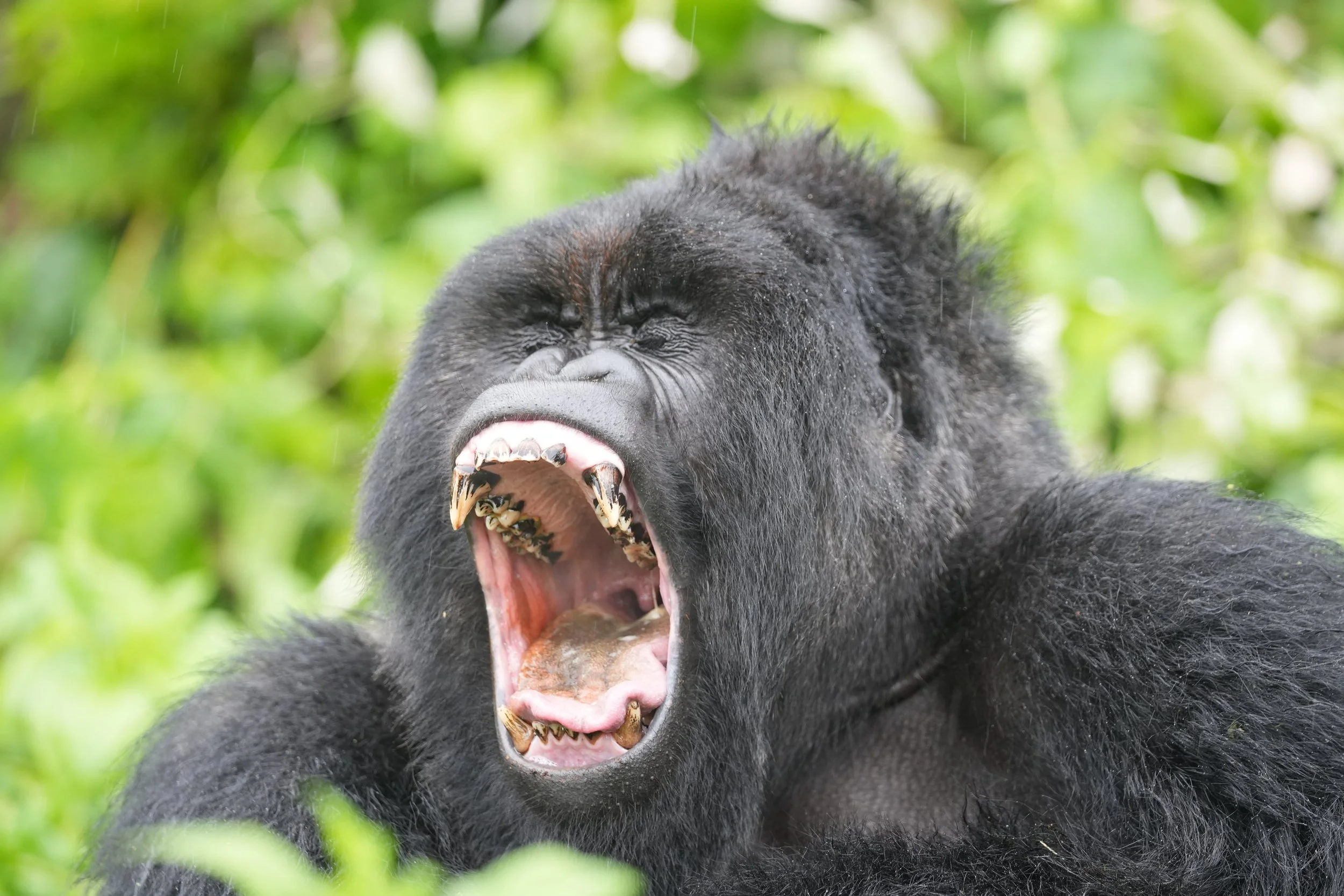
This depends on where you go and what you want to see. For example, South Africa is in the Southern Hemisphere. During their Winter, Northern Hemisphere Summer, the Elephant Grass is dead. This is the time of year preferred for Photographers. Great Migration in Kenya? Late June, July, August, and September. Want to save money? I had one of the most spectacular Gorilla Treks in Rwanda during November “Rainy Season”. What time of year is part of the discussion when planning!
Here you will find my lists of the Seasons for East and Southern Africa.
Guide on South Africa Bush Walk © Flyga Twiga™ LLC
2. Is it safe to travel to Africa for a Safari?
Yes – when you know what to do, where to go, and with whom to go. Why my Slogan is “Happy Day! Safe Safari!” You can find out more, here.

CDC Cover © Flyga Twiga™ LLC
3. What vaccinations or medications are required for an African Safari?
This depends on where you want to go. East Africa requires “Yellow Fever”. To the point Uganda will make you take the Vaccine, at the Airport, if you forget your Center for Disease Control Card (CDC). You can find here the CDC Vaccine Suggestions for Travel.
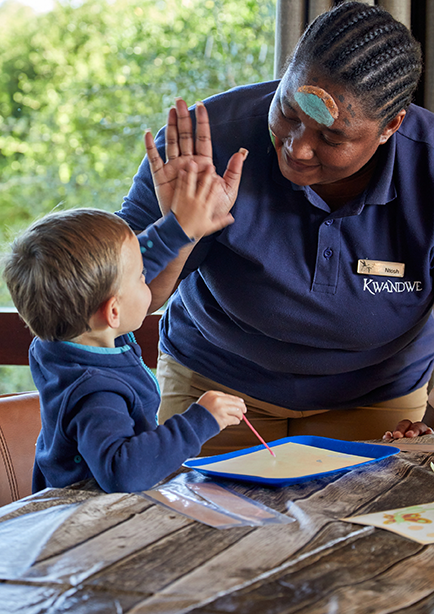
Photo Credit: Ecca Lodge Kwandwe Private Game Reserve
4. Can children or families go on an African Safari?
Absolutely! South Africa, outside greater Kruger National Park, is Malaria Free. Places such as Kwandwe Private Game Reserve, in South Africa’s Malaria Free Eastern Cape, have entire an Safari Lodge designed for children. Ecca Lodge is entirely fenced, for your child’s safety. In addition to special programs for children, each Family is given a Private Game Drive Vehicle. The perfect way to introduce budding Conservationists to African Wildlife!

Leopard, Mara North Conservancy, Kenya © Flyga Twiga™ LLC
5. Where is the best place to see the “Big Five” on Safari?
The “Big Five” were named by Teddy Roosevelt as the most difficult to hunt. We now “hunt” the Lion, Elephant, Leopard, Cape Buffalo, and Rhinoceros with our Cameras. While you can never guarantee which animals will decide to show themselves, there are places where you will have a greater likelihood for specific animals.
While having excellent Gorilla Trekking, Uganda does not have Rhinos in the wild. Kenya does, with Amboseli National Park having the famous Elephants which migrate within the Park. In South Africa, Sabi Sand has the largest density of Leopards on Earth! That said, one of the best Leopard sightings I’ve had on Safari was in Mara North Conservancy in Kenya.
We’ll plan together where your African Safari will be best – for you!

EcoTraining Trackng South Africa ©Flyga Twiga™ LLC
6. What should I wear or pack for an African Safari?

Jomo Kenyatta Airport Nairobi, Kenya © Flyga Twiga™ LLC
7. Do I need a Visa to visit African countries for a Safari?
Yes. This is also dependent on your Passport Country. For Americans, some are Visa Upon Arrival (such as South Africa), while others, such as Namibia have a long pre-Arrival application process. Here is the more in-depth. We see you through the process and make 100% sure you have all the documentation.

Fishing at Malaria Free Kwandwe Private Game Reserve, South Africa © Flyga Twiga™ LLC
8. What is the difference between a National Park and a Private Game Reserve?
There are 3 major differences. First is Ownership and Management. National Parks are publicly run and managed by the government (e.g., Kenya Wildlife Service for Amboseli). Private Game Reserves are owned and operated by private individuals, entities, or companies (e.g., Kwandwe in South Africa).
The second is Access and Regulations. National Parks are open to the Public, with Entry Fees, Self-Drive Options (for Residents), and stricter Rules on Activities (e.g., no Off-road Driving). Kruger National Park is a good example. Private Reserves typically restrict access to Guests staying at affiliated Safari Lodges (often called Concessions within the Safari Industry), allowing more flexible activities like Guided Night Drives or Walking Safaris.
The third is Size and Experience. National Parks are often larger and busier, offering diverse Ecosystems, with potentially more crowded viewing. Currently there are numerous Viral Videos regarding this year’s Great Migration. Private Reserves are smaller, more intimate, with lower Game Drive Vehicle densities. They may offer better wildlife sightings, and they may fund Conservation through tourism revenue. Kwandwe Private Game Reserve is an excellent example.

Loving Twiga, Kenya © Flyga Twiga™ LLC
9. What does a typical day on an African Safari look like?
A sample Safari Day:
05h00 A wake-up knock on your door. Tea, Coffee, and Rusks are served on the Lodge’s Main Deck followed by the Moring Game Drive, departing 05h30. Duration is approximately 3 hours.
Return to Lodge for a hearty African Breakfast. Plan one day for Bush Walk following Breakfast.
Between Game Drives, Relax by the Pool, Go to the Gym, Enjoy the Library & Games Room, Spa Activities, View Wildlife from the Viewing Deck.
Afternoon Tea, followed by Evening Game Drive. Sundowners on Safari. Followed by Dinner at the Lodge. Possible Night Game Drive.
Enjoy drinks by the Boma, sharing your day’s adventures with fellow travelers.
Lala Salama – rest well for another early Morning Game Drive tomorrow! #SafariLife

Cheerful Waitstaff South Africa © Flyga Twiga™ LLC
10. How much should I tip on an African Safari?
As the Safari approaches, this is the biggest concern for my Clients. As such, we tailor a personalized Tipping Guide for your bespoke Safari. While we can’t anticipate every moment you will want to tip, we arm you with the best knowledge extensive Safari experience can provide.
We can’t wait to start planning your dream African Safari Adventure!
East and Southern Africa Safaris are booking 2 years out -
Let’s start chatting today!
Happy Day! Safe Safari!
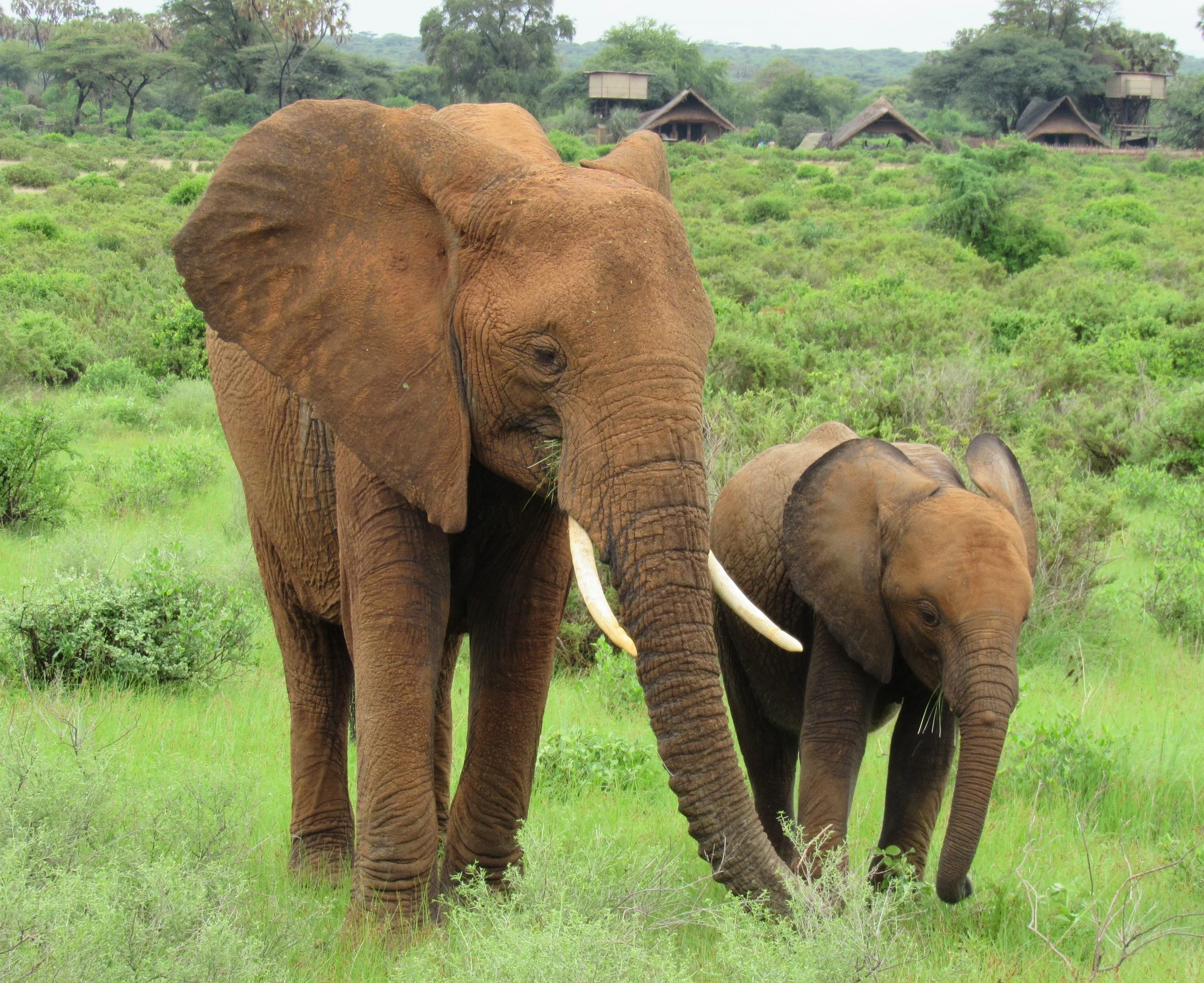
Mama and Baby Ellies, Kenya © Flyga Twiga™ LLC

Created by Scott! He and his wife, Christine, went on a Kenyan Safari Adventure last October. “Shaka Around the World” has great, educational, and fun videos from their Safari.
Please subscribe!

Looking for a good gift for yourself or a loved one before Safari? I would suggest a great Camera and Lens Combo.
While I did initially start doing my own research (Shoutouts to Rachel Carter Images, Erin Henderson Media and CommuniKait), I quickly realized I was in WAY over my head. Turning to my friends, Avid Photographer Ara Ko Lopez and Professional Photographer Jurate Alasevičienė.
Jurate became my mentor, tutor, and my “camera therapist” through an extremely harsh learning curve. She suggested the Sony a6700 and a second-hand professional lens, both ideal for Safari.

Sony a6700 Camera©Flyga Twiga™ LLC
Protip: Sony now Region Locks the Languages on cameras - check to see if English is on yours! Been meaning to learn Korean, or Arabic! ;-)
For my first big trip in October, South Africa and Victoria Falls with my husband, I didn’t have the nerve to carry the professional lens. Our trip included a lot of regional Airlink Flights.
This actually turned out to be a wise decision. On my November Gorilla Trekking, Erin Henderson would be accompanying me. On several occasions she had to reset my camera. Thanks to her, and Jurate’s great encouragement, by the Rwanda Gorilla Trek, I hit my stride.

Beautifully Designed and Made Rift Valley Leather Bag ©Flyga Twiga™ LLC
I bookended my Gorilla Trekking with time in Kenya. There, in addition to having a Celebration Dinner, on the rooftop of Nairobi’s Trademark Suites, I celebrated Flyga Twiga’s 10th Anniversary with a Rift Africa Custom Designed, Handmade Camera Bag. Thank yous to brilliant Designer/Leathermaker Isiah and Operations Manager Zadock Langat!
While I have a long way to go with my photography, for the first time I actually have pictures I’d like to print and hang! A final shoutout to Peter Manjagaledze for taking the time to help. Much, much appreciated!
Thank you for everyone!

One and Only Gorilla's Nest Welcome Dancers ©Flyga Twiga™ LLC


Samburu Jackal ©Flyga Twiga™ LLC

“Honeymoon Couple” is what you call when the male Lion of a pride takes a young Lioness out to mate for the first time. This Lioness was young and still had some of her spots! While you can’t see him, the male Lion’s brother is nearby, for protection.
Last November I had the most romantic, perfect Safari with my husband in Mara North Conservancy. It was his first trip to Kenya. After 31 years of marriage, it felt like we too were on our Honeymoon. 💜💜💜

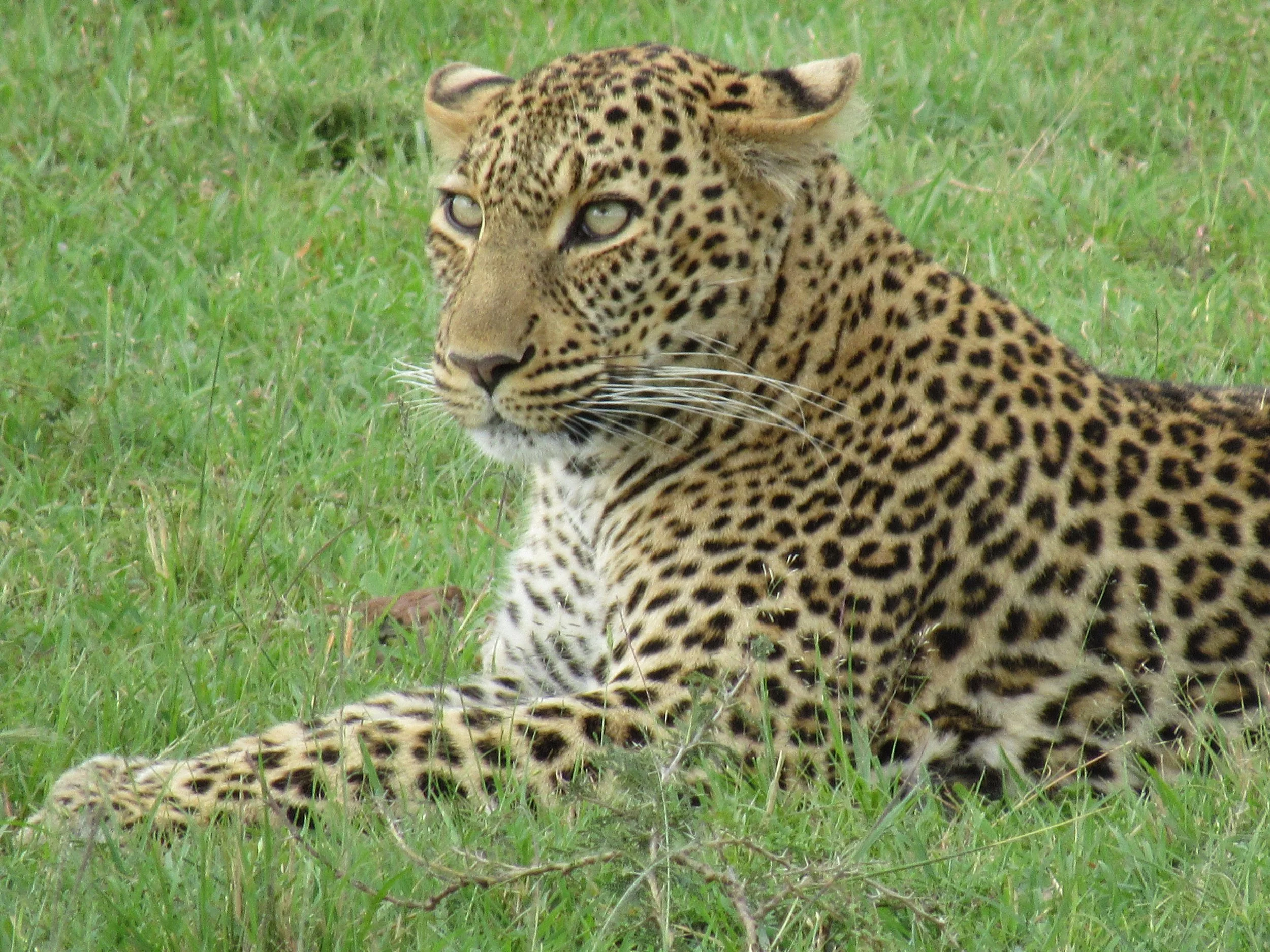
The same is true for me. After countless Safaris, living and working in Africa, 15 years & 3 months since my first Safari in Madikwe Game Reserve, South Africa, the Leopards decided to appear for me in Kenya.
Starting with Samburu National Reserve, followed by Maasai Mara National Park, and ending with so much time with this beauty from Mara North Conservancy - Leopards in all three. Of course, if I were to be truly African, I’d say the Leopards were pleased I finally brought my husband to Magical Kenya. May be true!

Leopard Mara North Conservancy ©Flyga Twiga™ LLC



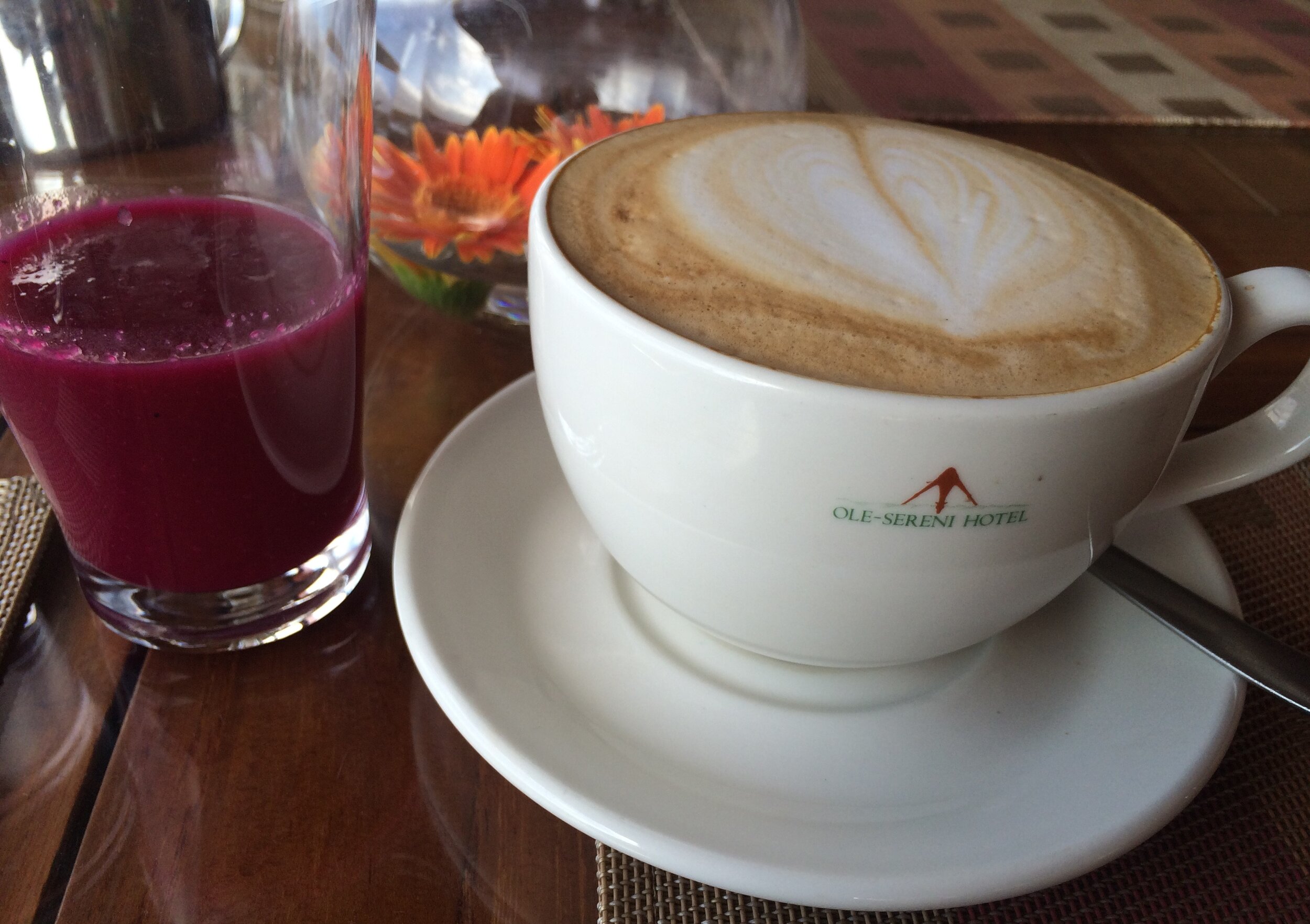
Morning Coffee & Beet Root Juice Ole Sereni Nairobi Kenya © Flyga Twiga™ LLC

Kenya Golf © Flyga Twiga™ LLC
18 holes, Par 72, Length : 6571 yards
An 18 hole championship golf course laid around the sprawling 5 star luxury golf resort. Windsor Golf & Country Club is the only African member of the " Great Golf Resorts of the World". The course has a sprinkling of water hazards and bunkers to make it a challenging, yet enjoyable golf course. The lush fairways are lined by forests where you might even spot the Sykes monkey apart from the dozens of exotic African bird species.
Proudly called the Home of Golf by its elite membership, is in many ways the ultimate embodiment of Kenya’s unique marriage ancient golf tradition and a modern 18 hole championship golf course.
As this club prepares to celebrate its long-awaited centenary, Muthaiga G.C. has also been reborn as one of the most prestigious and challenging courses in the region.
The force behind this renaissance is an extensive course reconstruction by the celebrated South African course designer Peter Matkovich, which in 2004 returned Muthaiga to prominence as the finest course with the fastest greens in East Africa.

Golfing with Monkeys Windsor Golf Resort, Kenya © Flyga Twiga™ LLC
18 holes, Par 73, Length : 6802 yards
Nakuru Golf Club 18 hole golf course was opened in 1929 by Lord Francis Scott and rests peacefully on the slopes of the volcanic Menengai Crater. It is the only uphill course in Kenya – the rolling fairways gradually lead to the mostly uphill greens. Spectacles of the blazing coral pink flamingo patches dotting the deep blue hue of Lake Nakuru, greet your eyes on the 8th and 18th tees. This championship course is visually pleasing and has some unusual challenges and therefore exciting to play.

Golfing with Zebras Great Rift Valley Lodge Kenya ©Flyga Twiga™ LLC
9 holes/ 18 tees, Par 72
This beautiful short course is set at the foot of the snow capped Mount Kenya, and lined by tall mountain fir trees. Lush and hilly, the course is a series of interesting par 3 holes on which players may use a range of irons ranging from a 3 iron to a Pitching Wedge off the tee.
The course is located in the Mount Kenya Safari Club grounds. Activities at the club also include fishing, horseriding, swimming and tennis. An animal orphanage is also located in the club grounds.

Great Rift Valley Lodge Kenya © Flyga Twiga™ LLC
18 holes, Par 71, Length : 6580 yards
This resort course is on a hill set against a backdrop of Lake Naivasha and the extinct volcano, Mount Longonot. Irrigated Fairways are lush and springy and greens well maintained. The course, designed by Swede Thomas Fjastadt, snakes through the natural Lake Naivasha vegetation such as exotic Acacia trees, and also contains water hazards. The lodge offers bird walks, mountain biking, and horse riding.
Sigona Golf Club combines luxury, exceptional service and the ultimate golfing experience. Located in Kikuyu, along the Nairobi-Naivasha highway, the club is a twenty minutes drive from Nairobi. Sigona Golf Club lends itself a serene atmosphere amidst beautiful flower bushes and scenic greenery. Constructed in 1938, this very lovely private members club has an inviting, modern club house and a golf course designed to championship standards. It also boasts a swimming pool with a bar and a children’s’ play ground to meet your recreational needs.

Muthaiga Golf Club © Flyga Twiga™ LLC

Kenya Bush Plane©Communikait Used with permission.
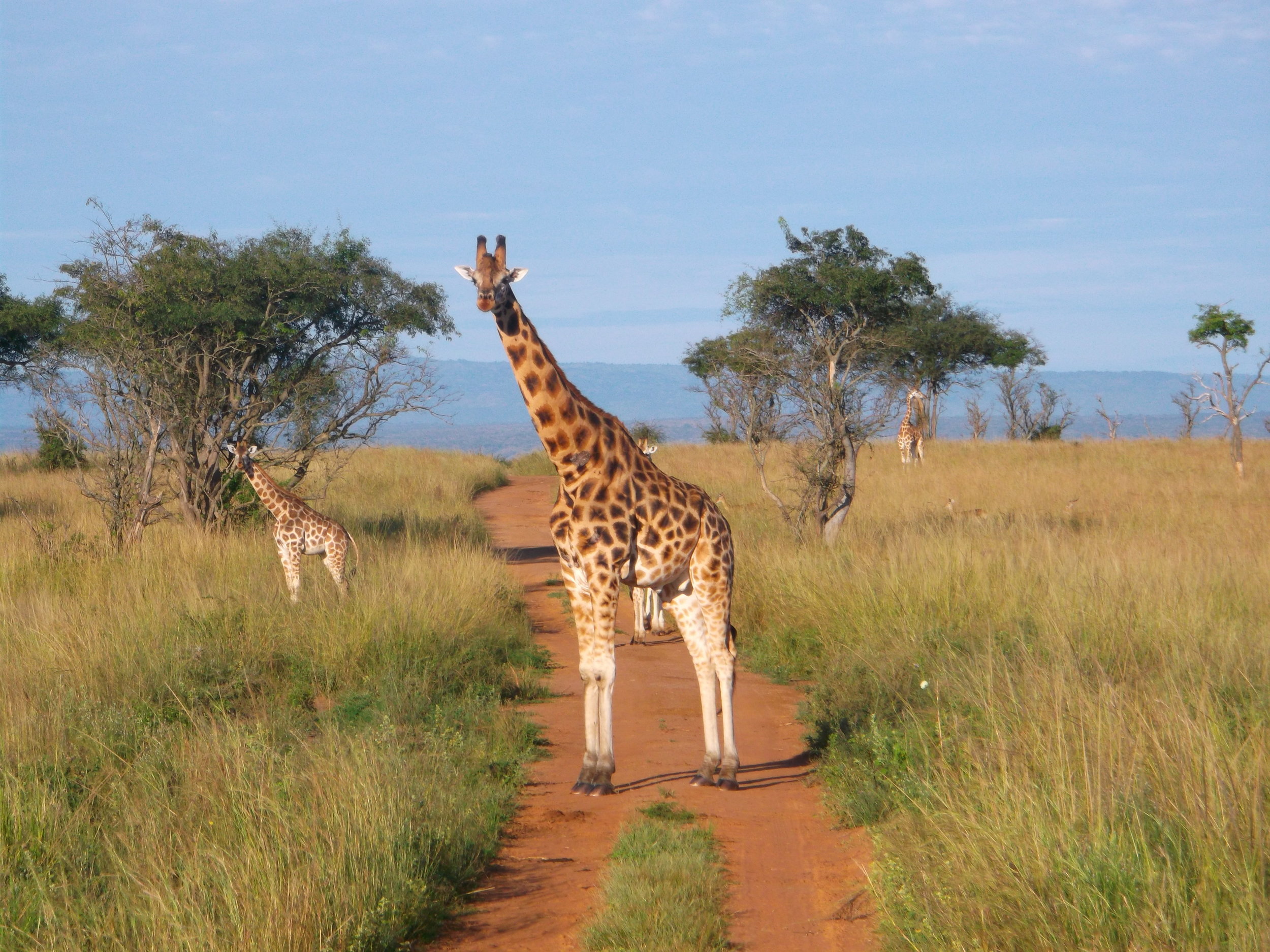
Giraffes, Queen Elizabeth National Park, Uganda ©Flyga Twiga LLC
I am always amused when I hear someone claim their’s is the “best approach” to Wildlife Conservation. As a Wildlife Conservationist, I adhere to the wholistic approach – everyone, every group, every method, who is striving toward the same goal of saving Endangered Animals, plays a vital role in Wildlife Conservation.
And, there are profoundly different approaches, all of whom should be cheered and lauded for their parts in helping save the Endangered Wildlife of Africa. Here are 9 of my favorites, with some new approaches making the list as well. Please feel free to put your favorite in the comment section!

Lodge Guard in Siana Conservancy, Overlooking Maasai Mara Game Reserve Kenya ©Flyga Twiga LLC
With the increase in violent poaching in the past few decades, there has emerged groups of highly trained Counter or Anti-Poaching Units (APUs). Two such groups are Vetpaw and the Black Mamba APU. These highly trained “Boots on the Ground” APUs conduct Wildlife Conservation by going on the offensive against often highly armed, dangerous Criminal Poachers.
Vetpaw was founded by Ryan Tate with the idea of using his military experience. Mr. Tate’s group’s approach to Wildlife Conservation began after he “…interviewed his colleagues and saw the difficulties and frustrations of men and women who are highly skilled in combat-related areas, but unable to leverage those skills in a conventional civilian setting. They have a continuing dedication to serve others, and Ryan helps them channel it.”
The Black Mamba APU consists of 33 Women and 1 Man working in boundaries of the 52,000ha Balule Nature Reserve, which is part of the Greater Kruger National Park, South Africa. Their objectives include educating “…their communities to understand that the benefits are greater through rhino conservation rather than poaching, addressing the social and moral decay that is a product of the rhino poaching within their communities. They are concerned for their children’s sake as the false economy has brought loose morals and narcotics into their communities.”
Both groups offer back-up and assistance to the courageous Wildlife Rangers who put their lives on the line everyday to stop Poaching. Bravo to VetPaw and The Black Mambas!

Alpha Male Mgahinga Gorilla National Park, Uganda © Flyga Twiga LLC
One of the hottest, most exciting new developments in Wildlife Conservation is the use of Artificial Intelligence (AI). Headquartered in Washington, DC, the nonprofit RESOLVE's Biodiversity and Wildlife Solutions Program just announced its new TrailGuard AI.
Without getting too technical, the way this AI works is:
“TrailGuard AI is the first wildlife-oriented security camera system designed for the rigors of the bush that combines: easy concealment due to its small size (i.e. the length of one’s index finger), human detection algorithms performed on the Intel computer vision processing unit housed in the camera head, long battery life, and near-real time connectivity to alert rangers at park HQs to be able to make timely interventions.”
As my good friend Matt Thomas, who has long been interested in and studies AI says, ”AI is like any other major advancement in technology. We can use it for great evil or great good. It is our choice.” TrailGuard AI, and its ability to help Conserve African Wildlife, is most definitely for the greater good.
Often giving the loudest “voice” to Conservation, Activists Groups play a central role in saving the Endangered African Wildlife. There are so many wonderful groups, I will highlight one whose work I have supported and who’s current Chief Operating Officer (CEO) is one of the Powerhouse Stars in African Wildlife Conservation.
WildlifeDirect (previously the Africa Conservation Fund) was founded in 2004 by the beloved conservationist, Dr. Richard Leakey, and former World Bank Representative to Kenya, Harold Wackman. With this great heritage, in 2008 Paula Kahumbu became CEO of WildlifeDirect. Under her Leadership, she has helped transform Conservation in Kenya. Through her work, WildlifeDirect playing an instrumental role in seeing the first ever, First Lady of an African Nation, adopt a Conservation Campaign. Through the “Hands Off Our Elephants” Ms Kahumbu’s WildlifeDirect has been a guiding force in changing the way Kenyans view Wildlife Conservation.
As the video above from the Nairobi 2015 “Global March for Elephants & Rhinos” shows, Activist Groups play a key role in having local communities become involved in Wildlife Conservation. I had the honor of attending and meeting Ms. Kahumbu in person and march with her during the rally. Again, each approach to Wildlife Conservation is like the Ecology itself, we all have a role to play.

Monkey and Baby ©Flyga Twiga LLC
This may be a bit controversial. And, by Zoos, I mean modern-day, state-of-the-art, compassionate, well designed Zoos. I am of the opinion that Zoos are one of the Cornerstones of Wildlife Conservation. Aside from the great work they do to help protect animals, it is here, at the Zoo, where many children first learn about Wildlife. For some children, seeing a Giraffe, or an Elephant at the Zoo will spark a lifelong love of Wildlife, which I believe can lead to a passion for Conservation.
Additionally, a lot of people don’t know about the amazing work modern day, state-of-the-art Zoos are doing – beyond the gates of the Zoos. In fact, the Wildlife Conservation Society, founded in 1895, is actually the international branch of the New York Zoological Society/Bronx Zoo. I proudly say, I worked for one of the oldest Conservation Zoos in the World!

Kilimanjaro & Zebras, Amboseli National Park, Kenya ©Flyga Twiga LLC
No surprise this one is near and dear to my heart. I truly, deeply believe that traveling to Africa and seeing the animals in the wild, is life changing. I have seen time and time again the shifts in perspectives, the transformational experience that is going on Safari in Africa. Having been blessed with a set of skills and knowledge, born from living and working in Africa, it seems natural to bond my passion for International Development and Wildlife Conservation through being part of the Tourism Community.
But, it isn’t just me who sees the hand-in-hand relationship to Travel and Conservation. Each year The Explorers Club, of which I am a Member, Lowell Thomas Award is given. Nicknamed “The World’s Foremost Globetrotter,” Mr. Thomas instilled a passion for exploration, and conservation, at a time when the world was “opening up.” Mr. Thomas was a Member of The Explorers Club as well, and I hope to instill the same love of Travel and Conservation to others, just as he did for so many in his time.
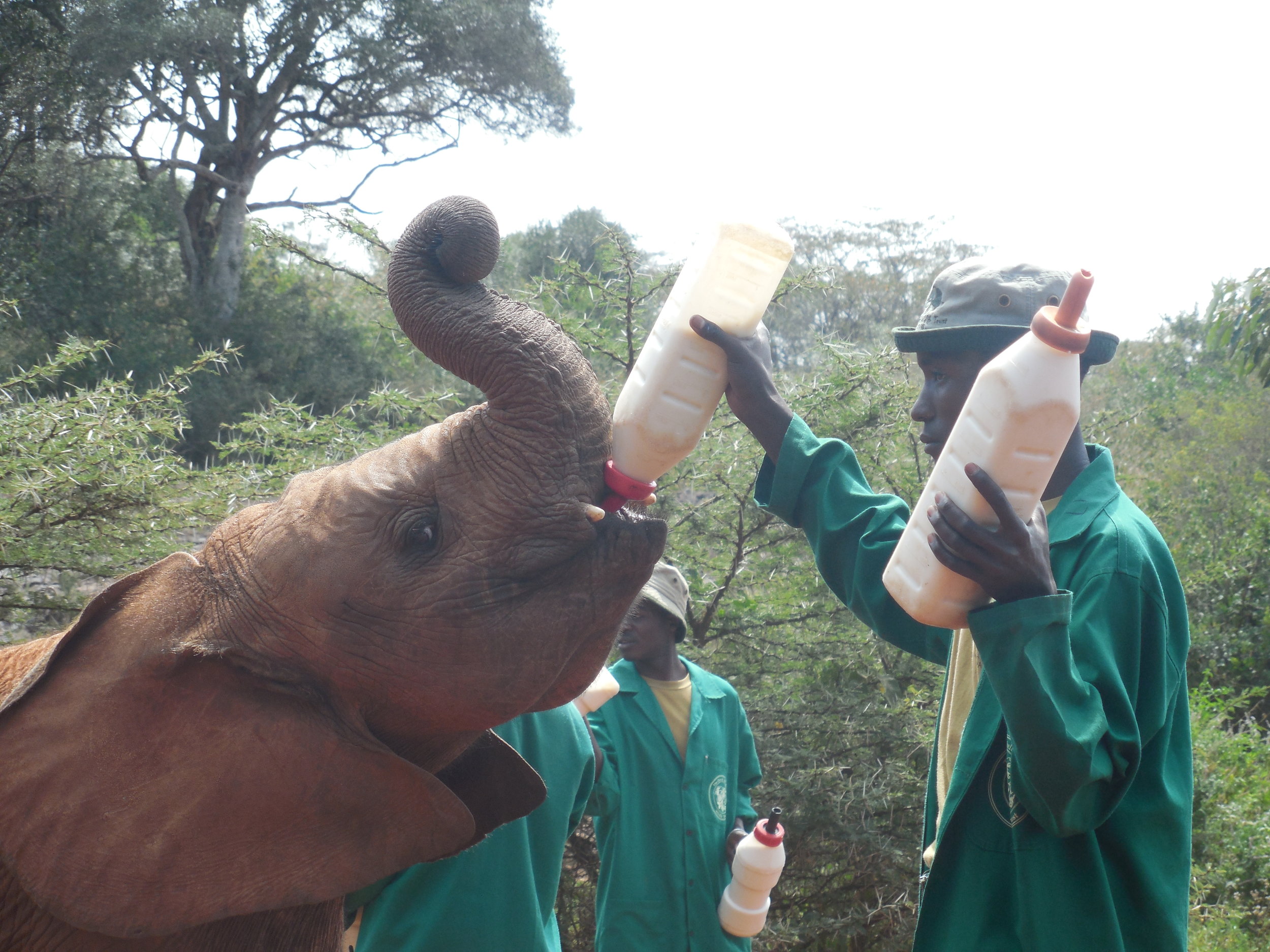
David Sheldrick Elephant Orphanage ©Flyga Twiga LLC
There are so many wonderful Animals Sanctuaries, all over the world, doing amazingly awesome work in Wildlife Conservation. One of the best known is the David Sheldrick Wildlife Trust (DSWT). Founded in 1977, DSWT has become “…today the most successful orphan-elephant rescue and rehabilitation program in the world and one of the pioneering conservation organisations for wildlife and habitat protection in East Africa.”
While DSWT is committed to re-introducing orphaned elephants to the wild, my all-time favorite Animal Sanctuary, The Elephant Sanctuary, South Africa, takes in Elephants who cannot be re-introduced into the wild. Through positive reinforcement domestication, these Elephants live out their lives being Ambassadors for their highly Endangered Species.
By interacting, ethically, with these magnificent Ambassadors, visitors to the Elephant Sanctuary can learn more about the true nature of the Endangered Elephants. It was during my first visit to the Elephant Sanctuary South Africa, over 10 years ago, where a deep love for and desire to save African Wildlife began to encircle my heart.
Animal Sanctuaries, and especially those working with the highly Endangered Elephants, have an extremely important role to play in Wildlife Conservation.

Zebra Wildlife Warning Sign ©Flyga Twiga LLC
Much like Zoos, Animal Kingdom Parks have to be qualified. The Animal Kingdom Parks, of which I am speaking, offer safe “Safaris” and Wildlife Experiences. And, as with Zoos, I see these as highly beneficial for sparking an early interest in Wildlife Conservation in young children.
The best example I have of this is the experiences my friend Heidi Thomas (wife of aforementioned Matt Thomas!). Heidi & Matt have regularly taken their three children to experience Disney's Animal Kingdom Theme Park. Heidi has shared with me the true joys here children have gotten from their “Safaris.” I am not surprised honoring Walt Disney’s legacy with an Animal Kingdom Park. A little known fact, at the time of his death in 1966, Walt Disney had one of the largest African Mask Collections in the entire United States.
And, if Walt Disney’s and other Animal Kingdom Parks inspires future Wildlife Conservationists – I am all for them!

Amboseli Elephant Family, Kenya ©Flyga Twiga LLC
Often after a first Safari and seeing the African Wildlife in the wild, people often look for ways to share their soul changing experiences. Many also look for avenues to support and become part of Wildlife Conservation. One way of doing this is by writing a book.
For example, inspired by her first Safari, my Friend and Author, Mary Jane O'Loughlin, was inspired to write the book “Ruby and Baby an Unlikely Friendship.” It is through this book that she shares her love of African Wildlife while having a portion of the proceeds support, Amboseli Trust for Elephants.
Sharing her love for African Wildlife and supporting the Amboseli Elephants at the same time, Mary Jane greatly contributes to Wildlife Conservation!

Kait Hanson at Finch Hattons Luxury Camp, Kenya ©CommuniKait
My favorite new way to approach Wildlife Conservation is Social Media Influencers using their Platforms. A unique, and extremely effective form of communication, these Influencers can reach a vast audience.
The perfect example of this is Social Media Influencer, Kait Hanson, of Communikait. Kait is a Lifestyle and Travel Blogger, Writer and Photographer. In addition to her exceptional Website & Blog, Communikait, Kait’s influence includes nearly 9,000 followers on Instagram. Her Communikait Facebook Page has over 3,000 Likes, and she has over 4,500 followers on Twitter. She rounds out her Social Media Powerhouse with 709.4k monthly viewers on Pinterest. That is a lot of Influence.
During her first Safari in Africa, Kait used her Social Media Platforms to showcase her Safari and the highly Endangered African Wildlife. Each of her posts had hundreds of Likes and Comments. For instance, her posts about seeing one of the last remaining Rhinos in the Wild, went out to her tens of thousands of followers. And, equally as important, to followers who may never been exposed to the realities of Endangered Animals and how close we are losing whole Species.
As a high-profile Social Media Influencer, Finch Hattons Luxury Tented Camp, asked Kait during her Safari to take over their Instagram Account. Located in Tsavo West National Park, Kenya, Finch Hattons astutely has realized the power of Infuencers in Social Media. And, they picked up numerous followers thanks to Kait’s Infuencer Status.
By using her powerful Social Media Influence, Kait is able to reach and educate a vast amount of people on the importance of saving Endangered African Wildlife. As one of the newest approaches to Wildlife Conservation – Kait’s contributions as a Social Media Influencer are the absolutely perfect Win-Win. A thousand cheers to Kait for all she does for Wildlife Conservation as a Social Media Influencer – Brava!

Amboseli Elephants, Kenya ©Flyga Twiga LLC
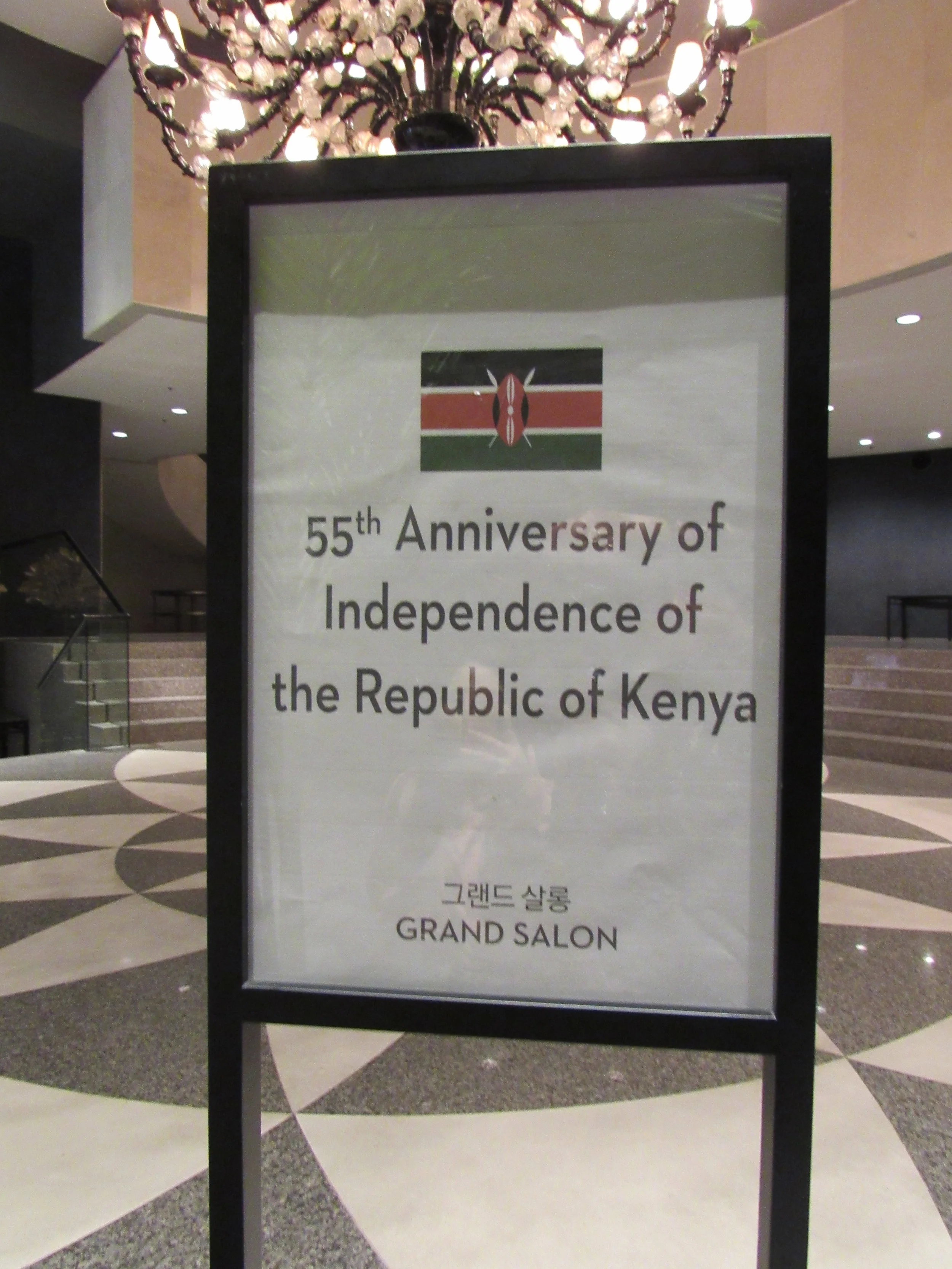
Kenya 55th Independence Day Celebration © Flyga Twiga LLC

Kenya Independence Day Invitation © Flyga Twiga LLC
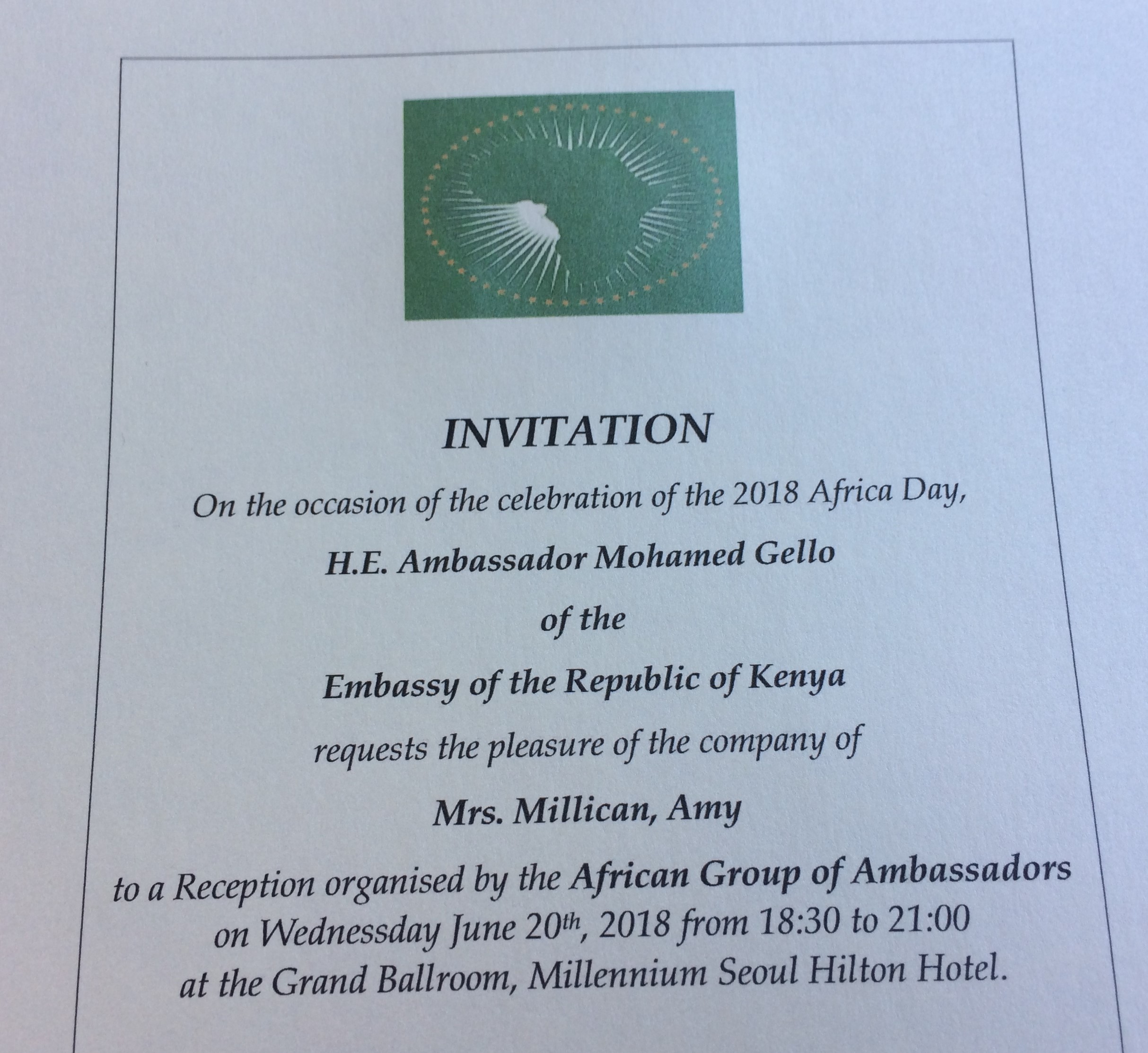
Africa Day Invitation 2018 © Flyga Twiga LLC
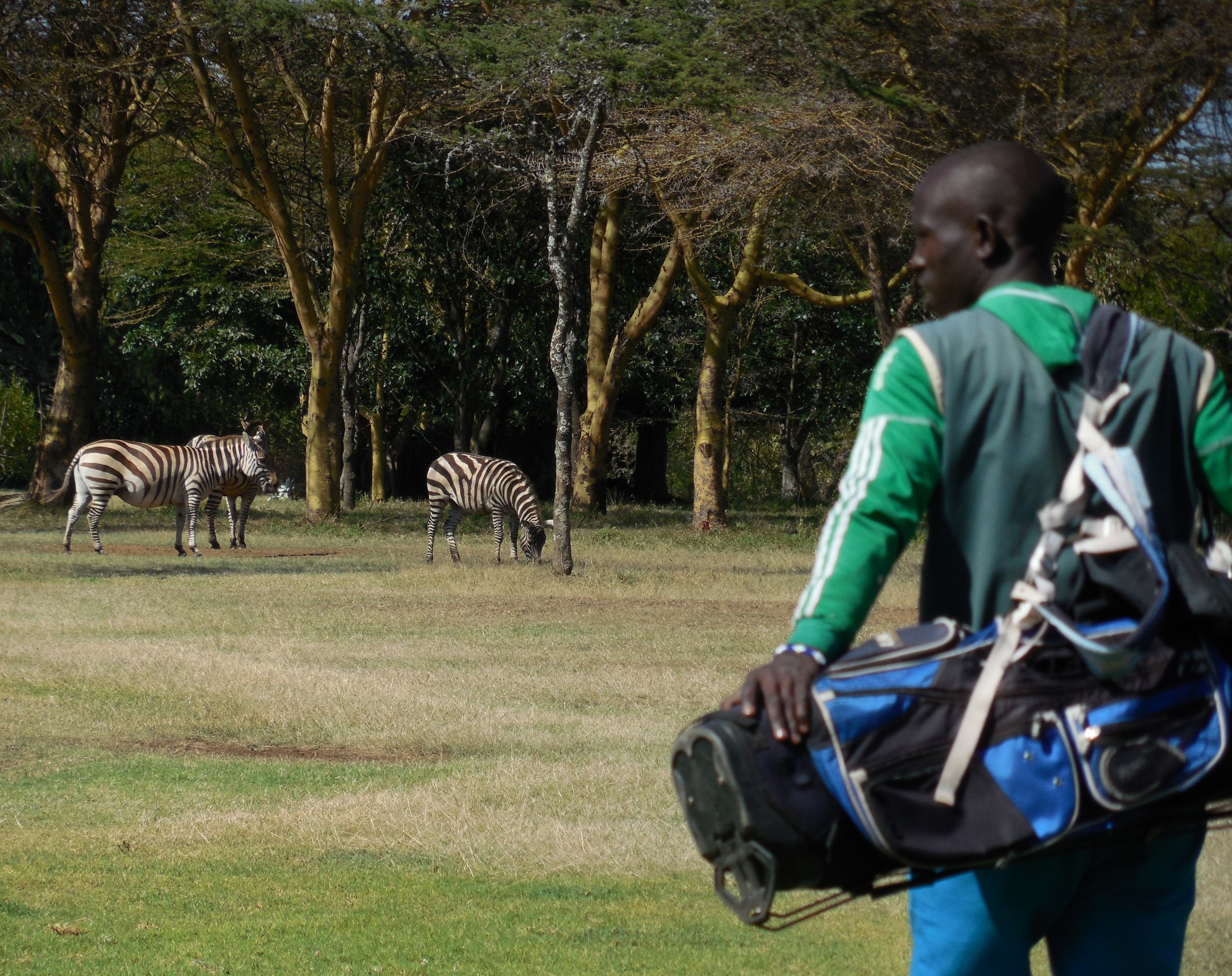
Playing Golf with Zebras Great Rift Valley Lodge & Golf Resort, Kenya © Flyga Twiga LLC
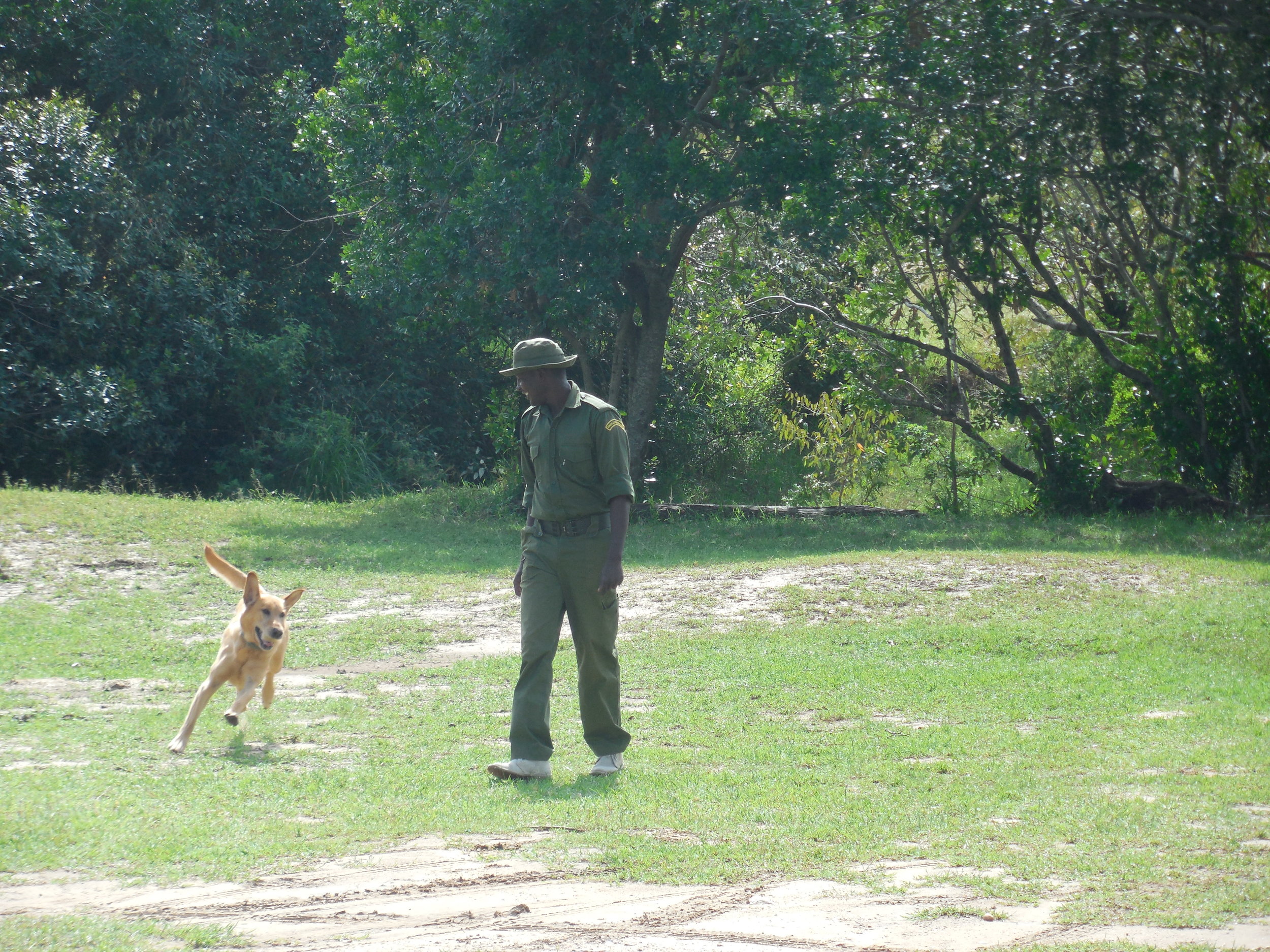
Kenya Wildlife Services (KWS) Working Dog © Flyga Twiga LLC
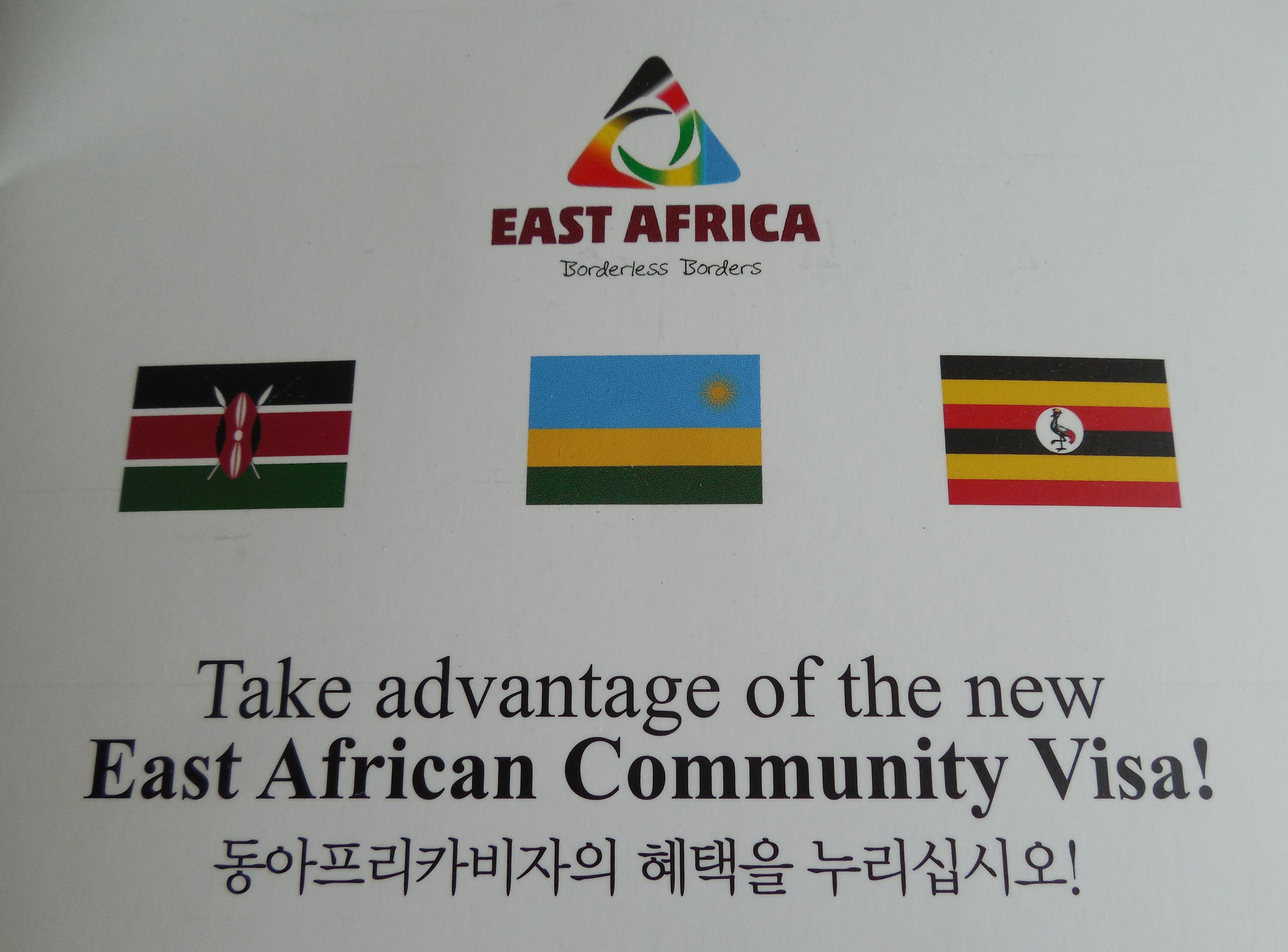
EATV © Flyga Twiga LLC
As Flyga Twiga has been covering, there seems to be quite a bit of change going on within the tourism regulations and procedures in the Republic of Rwanda. Earlier this year, the Rwanda Development Board (RDB) announced the doubling of Gorilla Trekking Permit Fees. This was discussed widely within the East African Tourism Industry (our reporting on this discussion). And, sparked a response from neighboring Uganda, who share the border and the few remaining Mountain Gorillas with Rwanda (Uganda Tourism Board Statement).
Now, Rwanda appears to be reinterpreting the much touted “East Africa Tourist Visa” (EATV). In a “Travel Tips Press Release” dated 2 August 2017, Coastal Aviation, one of the leading East African Safari Aviation providers, stated:
Visa Issues in Kigali
We have recently had a case where guests arrived in Kigali and were deemed to not have a valid visa. This caused us to be fined $3,000 by the Rwandan authorities. It transpired that the guests had an East African Univisa. They had applied through Uganda for this. The Rwandan authorities deemed this visa to be invalid as the guests should have applied to Rwanda, their first arrival point, rather than Uganda. Please ask you guests to double check this should it apply to them. We will no longer be responsible for any fines, should this recur. On Application for a Visa, the applicant is given a tracking number. It is important that we receive this tracking number, in order to be able to verify the visa, before flight.
This interpretation of the EATV was not a “one off” fluke, or misinterpretation by a rogue Rwanda Customs & Immigration Agent. Julian Edmunds, Managing Director of Coastal Aviation, only two days after the initial Press Release, sent out an email, subject, “Rwanda Visa Issues.” He stated in his 4 August 2017 email:
The Rwandese seem to interpret the multiple entry as that you may cross the borders between Rwanda, Uganda and Kenya...but that as soon as you leave these countries (ie to Tanzania) then the visa is deemed to have expired and a second visa is then required.
Yesterday we had another such incident. Guests had the East Africa Tourist Visa and used it to enter Kenya. They then left Kenya and then went to Tanzania; we then flew them from Tanzania to Rwanda. The immigration officers in Rwanda would not accept their East African Tourist Visa as they deemed it expired. Luckily the guests were American and therefore eligible to purchase a visa on arrival...had that not been the case, we would have been forced to repatriate them to Tanzania and fined $3000!
Nowhere in the documentation, in English and Korean, does it state that this should be the case. Rather, the document, titled, “Take advantage of the new East African Community Visa” states:
“The holder shall also be allowed to move out of the Republic of Kenya, the Republic of Rwanda, and the Republic of Uganda and return without having to pay for another visa. This will only be applicable for 90 days.”
What all this means for those traveling on the EATV is unclear. Hopefully the respective Tourism and Development Boards will issue clarifications on this matter. When they do, we will immediately provide the information here.
Until then, have a Happy Day! And, a Safe Safari!
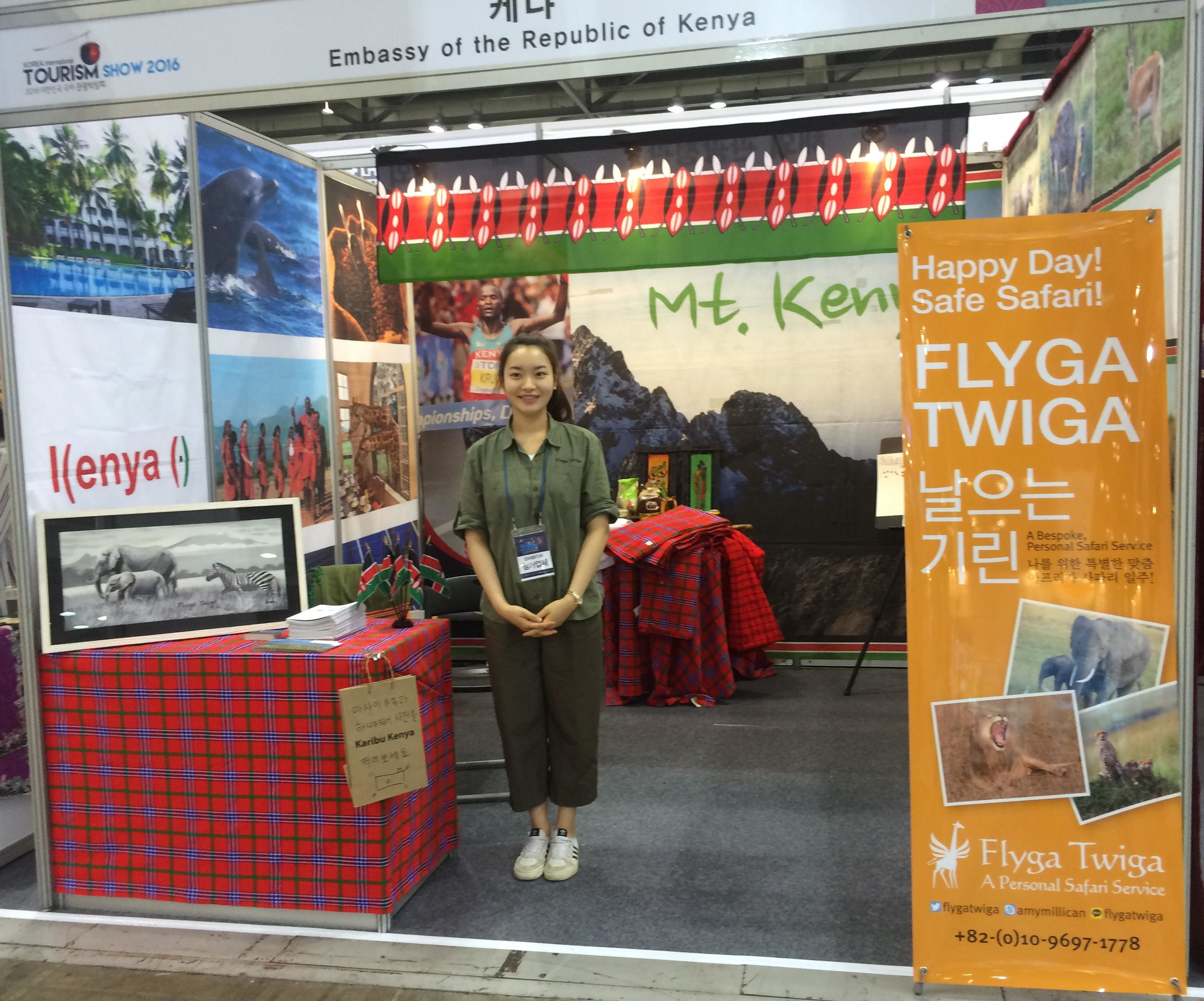
Won Sun Jang Tourism Student KITS 2016 © Flyga Twiga LLC
OVERVIEW
Title Korea International Tourism Show 2017
Slogan Light Up!
Dates and time August 24th (Thu) 2017 to August 27th (Sun) 2017 10:00AM ~ 6:00PM
Sunday, 10:00AM ~ 5:00PM
Venue IlsHall 7, Exhibition Center Ⅱ, Ilsan KINTEX
Capacity 11,290㎡ (Approx. 500 booths in total)
Hosted by Organization committee of Korea International Tourism Show, The Kookje Daily News, KyongbukIlbo, KyeonggiIlbo, JeonnamIlbo, JoongdoIlbo, KangwonDominIlbo, ChungbukIlbo, JeonbukDominIlbo, GyeongnamIlbo, HallaIlbo, The Korea Travel Times
Organized by Korea International Tourism Show Head Office l Universal Live Co., Ltd.
Sponsored by Ministry of Oceans and Fisheries, Ministry of Agriculture, Food and Rural Affairs, Korea Railroad Corporation, Korea Tourism Organization, Goyang City, Korean Food Foundation
Composition
- Opening Ceremony
- Domestic/International Pavilion
- Travel Information Pavilion
- Held together
- Special Hall
Special Event
- Global International Students Festival
- The World Alcoholic beverages Festival
- Travel talk Show
- Culture trip with tour commentator

KITS 2016 © Flyga Twiga LLC